
Radon Mitigation Cost in Upstate SC
Typical price ranges for radon systems in Greenville, Spartanburg, Anderson and nearby counties, what drives the price up or down, and a quick estimator.
Get a Free QuoteTypical radon mitigation prices
These are the typical ranges we see for Upstate homes. They are estimates, not quotes. Your final price is set after a free on-site look at your foundation, the soil under it and the best pipe route.
| Item | Typical range |
|---|---|
| Professional radon test (short-term) | from about $150 |
| Sub-slab depressurization (slab or basement) | $900–$2,500 |
| Crawl space sub-membrane system | $1,500–$3,500 |
| Combination foundation (crawl + slab/basement) | $2,200–$3,800 |
| Full crawl space encapsulation | $1,500–$15,000 (size/condition) |
| Radon-in-water system (well) | $1,200–$5,000 |
| Fan replacement / system repair | quoted on site |
| Electricity to run the fan | about $30–$300 per year |
Most single-family homes in the Upstate need one system with one or two suction points. Full encapsulation and well-water treatment are separate projects that only some homes need.
Get your exact price
Tell us about your home and recent test result. We usually reply the same day.
Estimate your radon system cost
Pick the options closest to your home. The result is a ballpark range based on the typical prices above.
Radon mitigation cost estimator
Estimated range: $900 – $2,500
This is a rough estimate based on typical Upstate ranges, not a quote. Your final price comes after a free on-site assessment.
What affects the cost of a radon system
No two homes are quite the same underneath. These are the factors that move a quote within the ranges above.
Foundation type
Foundation type matters most. Slab and basement homes usually get a sub-slab depressurization system: a hole through the slab, a small pit dug out underneath, and pipe connected to a fan. Many Upstate homes sit on crawl spaces, which need a sealed membrane over the soil before suction can work, so crawl space systems cost more. Homes with a mix, such as a basement under part of the house and a crawl space under an addition, need both and land in the combination range.
Home size
A larger footprint means more slab or more crawl space to cover. Bigger crawl spaces need more membrane, and larger slabs may need a stronger fan or a second suction point.
Number of suction points
Air needs to move freely under the slab or membrane for one suction point to cover the whole home. During our assessment we check that pressure field. Tight soil, footings that divide the slab, or separate foundation sections can call for more than one suction point, which adds pipe and labor.
Pipe routing: exterior, garage or attic
The simplest route runs the pipe up an outside wall to vent above the roofline. Many homeowners prefer the pipe hidden, which means running it through a garage or attic. Interior routes take more planning, more cutting and patching, and more labor, so they cost more. The estimator above adds about 15% for that.
Finished basement
If your basement is finished, the suction point has to go somewhere that works with the room layout, such as a closet or utility area, and the pipe has to pass through finished walls or ceilings cleanly. That takes extra time.
Crawl space condition
Crawl spaces with debris, standing water, low clearance or old torn vapor barrier take longer to prep. Some homeowners choose full crawl space encapsulation at the same time to deal with moisture as well as radon. That is a bigger project with a much wider price range.
Fan electricity
The fan runs around the clock. Depending on the model and how hard it works, expect roughly $30 to $300 a year in electricity, with most homes toward the lower end. Fans typically last 5 to 10 years. Our post on radon fan electricity and lifespan goes deeper.
What's included in our price
- Free on-site assessment and suction (pressure-field) check
- A clear written quote with pipe route and fan location
- Suction point(s) or sealed crawl space membrane
- Sealed PVC pipe vented above the roofline
- A fan rated for radon, sized to your home
- A manometer so you can see the system is working
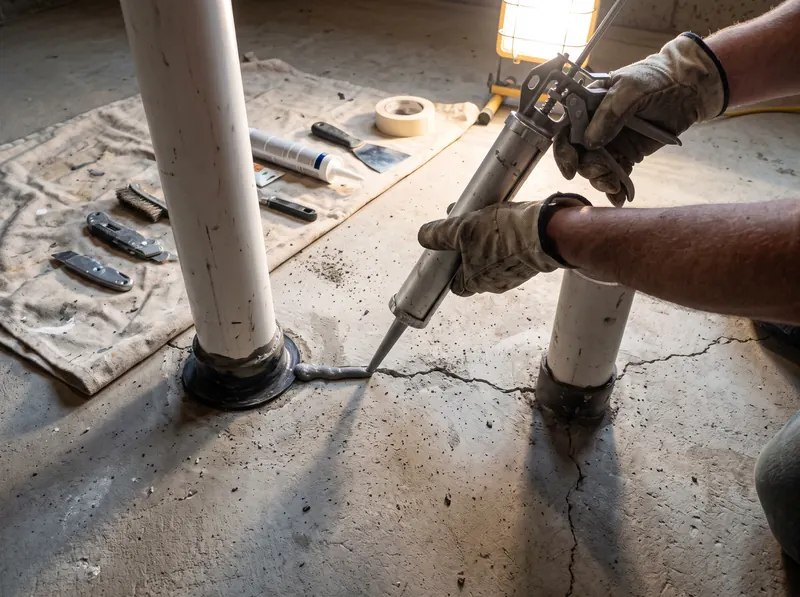
- Sealing of accessible cracks and openings
- System labeling and a walkthrough when we finish
- A post-install radon test, started at least 24 hours after the system turns on
See every step on our mitigation process page.
Radon testing cost
A professional short-term radon test typically starts at about $150. Testing is how you decide whether you need a system in the first place, and it is often required on a tight timeline during a home sale. SCDES also offers one free test kit per home while supplies last, which is a good starting point if you have never tested. If a kit or a home inspection already gave you a number, send it to us with your quote request and we will tell you what it means. See radon testing or our post on DIY vs. professional tests.
Radon mitigation cost FAQ
How much does radon mitigation cost in South Carolina?
In the Upstate, a typical sub-slab system for a slab or basement home runs about $900 to $2,500. Crawl space systems typically run $1,500 to $3,500, and combination foundations about $2,200 to $3,800. These are estimates; the final price depends on your foundation, size and pipe route, and we confirm it after a free on-site visit.
Why do crawl space systems cost more than slab systems?
A crawl space system needs a heavy plastic membrane laid over the soil and sealed to the walls, piers and seams, plus suction under that membrane. The material and labor for the membrane add cost. Crawl spaces with debris, standing water or tight access take more time, which also affects the price.
How much electricity does a radon fan use?
Radon fans typically draw roughly 100 to 300 watts depending on the model and how hard it has to work. That works out to about $30 to $300 a year in electricity, and most homes land toward the lower end. Fans run around the clock, so we size the fan to your home rather than oversizing it.
How long does a radon fan last?
Most radon fans last about 5 to 10 years before they need replacing. The manometer on your system shows whether the fan is still pulling suction, so a quick glance every so often tells you whether it is working. When a fan does fail, replacement is usually a short visit.
Is radon testing included in the price of a system?
Every system we install includes a post-install radon test to confirm your levels came down. A separate professional short-term test before mitigation typically starts at about $150. If you already have a recent test result from a kit or a home inspection, send it to us with your quote request.
Do I need a permit for a radon system in the Upstate?
Some jurisdictions treat parts of a radon install, such as the fan's electrical connection, as permitted work, and requirements can differ by county and city. We check what your local building department requires when we prepare your quote and include any needed permit costs in the written price.
Know your number. Fix it if it's high.
Free radon mitigation quotes across the Upstate — usually a same-day reply.