
Crawl Space Radon Mitigation in the Upstate
Sub-membrane depressurization systems that pull radon from under a sealed vapor barrier and vent it above your roof. Serving crawl space homes in Greenville, Spartanburg, Anderson, Pickens and Oconee counties.
Get a Free Quote Call (727) 300-6656Why crawl space homes get radon
Many Upstate homes sit on crawl spaces. In a crawl space, there's often nothing between your floor system and bare soil except air, and sometimes a thin, torn sheet of plastic. Radon from the soil collects in that space and rises into the living area through gaps around ductwork, plumbing, wiring and the floor itself.
Ducts and air handlers in the crawl space can make it worse. A small leak on the return side of the HVAC system can pull crawl space air straight into the house. The only way to know is to test. The EPA recommends fixing a home at 4 pCi/L or above and considering a fix between 2 and 4.
How sub-membrane depressurization works
Sub-membrane depressurization is the crawl space version of a sub-slab system. Instead of drilling through concrete, we create a sealed layer over the soil and pull radon from beneath it.
- Vapor barrier: we lay a heavy plastic membrane over the crawl space floor, overlap and seal the seams, and seal it to the foundation walls and piers.
- Suction point: a perforated pipe or suction fitting goes under the membrane, giving the fan a path to pull soil gas from the whole area.
- Pipe and fan: sealed PVC pipe runs from the suction point out of the crawl space to a radon fan mounted outside the living space.
- Vent above the roof: the fan discharges radon above the roofline, away from windows.
- Manometer: a gauge on the pipe shows the system is pulling suction.
Because the membrane covers the ground, it also cuts down on moisture coming up from the soil, which many homeowners notice as a drier crawl space.
Optional: full crawl space encapsulation
A radon system needs a sealed membrane on the floor. Full encapsulation goes further: it extends the barrier up the foundation walls, seals the foundation vents and access door, and often adds a dehumidifier to control moisture.
Encapsulation isn't required to lower radon, but it can make sense if your crawl space has standing water, high humidity, damaged insulation or musty smells. We'll tell you honestly whether your crawl space needs it, and price it as a separate line so you can choose.
What about the vents?
With a standard sub-membrane system, foundation vents usually stay as they are. With full encapsulation, they're typically sealed as part of the job. Either way, we'll explain how the change affects your crawl space before we start.
Our crawl space process
Review your test
We start with your radon result, or arrange a radon test if you need one.
Crawl space inspection
We check the height, access, soil, moisture, piers, ductwork and the best route for the pipe.
Written quote
You get a clear written quote, with the radon system and any encapsulation work listed separately.
Install
We remove debris where needed, lay and seal the membrane, set the suction point, run the pipe and mount the fan.
Post-install test
After the system has run at least 24 hours, we test again so you have a result showing your levels dropped.
Typical cost
Our typical range for a crawl space sub-membrane system is $1,500 to $3,500. Size, height, access, the condition of the floor and the number of suction points all play a part. A home with a crawl space plus a slab or basement area needs a combination system, typically $2,200 to $3,800. Full encapsulation is typically $1,500 to $15,000, depending on size and condition.
These are estimates; your final price comes after an on-site look. See the full table in our radon mitigation cost guide.
Crawl spaces and Upstate radon
Greenville County is the only South Carolina county in EPA Zone 1, its highest radon potential category. Pickens and Oconee counties are Zone 2, yet state program data shows an average initial test of 3.0 pCi/L in Pickens County and 5.0 pCi/L in Oconee County, the highest county average in the state. Elevated radon has been found in almost every county in South Carolina.
That's why a crawl space doesn't get a pass. Test it, and if the number is high, fix it with a system built for crawl spaces.
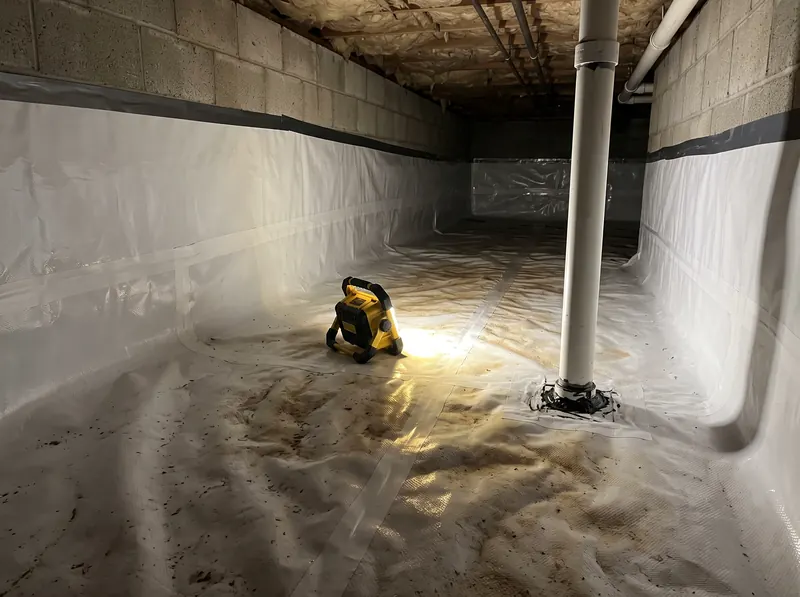
Done neatly, with access in mind
Your crawl space still needs to be a place a plumber or HVAC tech can work. We seal the membrane well, route pipe out of the way of service paths, and leave the space cleaner than we found it.
South Carolina doesn't license radon professionals, so look for NRPP or AARST certification when you choose an installer. We're happy to share the credentials of the technician assigned to your job.
If your home also has a slab or basement section, see sub-slab depressurization.
Frequently asked questions
Does a radon system work in a crawl space?
Yes. Crawl spaces are fixed with sub-membrane depressurization. A sealed plastic barrier covers the ground, and a fan pulls radon from underneath it and vents it above the roof. It works on the same idea as a sub-slab system, with the membrane doing the job of the concrete. A post-install test confirms how far your levels dropped.
Do I need full crawl space encapsulation for radon?
Not always. A radon system needs a well-sealed membrane on the ground, but full encapsulation, which also seals the walls, vents and sometimes adds dehumidification, is optional. Many homeowners choose it for moisture control and a cleaner crawl space. We'll explain both options and price them separately so you can decide.
How much does crawl space radon mitigation cost?
Our typical range for a crawl space sub-membrane system is $1,500 to $3,500. Full encapsulation is a bigger project, typically $1,500 to $15,000 depending on size and condition. Homes with a crawl space plus a slab or basement need a combination system, typically $2,200 to $3,800. Final prices come from an on-site look.
Can I just open the crawl space vents to lower radon?
More airflow can lower radon in some crawl spaces, but results vary with weather and season, and it can bring moisture problems or cold floors. It also does nothing to stop the pressure that pulls soil gas into the house. A sealed sub-membrane system is the more dependable fix. We'll talk through your vents during the assessment.
Get a free crawl space quote
Tell us about your crawl space and your radon result. We usually reply the same day.
Related services and areas we serve
Crawl space systems are installed throughout the Upstate.
Related services
Nearby service areas
See every town we cover on our service areas page.
Know your number. Fix it if it's high.
Free radon mitigation quotes across the Upstate — usually a same-day reply.